
25 November 2026
Why Person-Led and Person-Centred Care Should Be Used Interchangeably in Practice
Written by Pat Hobson · Last updated 25 November 2026
Person-led and person-centred care are not competing approaches. Why the most effective dementia care uses both together, and what that looks like in practice.
If you work in dementia care, you have heard the phrase "person-centred care" more times than you can count. It appears in care plans, inspection frameworks, training materials, and policy documents. It is printed on the walls of care homes and embedded in CQC standards. It has been the gold standard for decades, and rightly so, because it transformed dementia care from a task-focused, institutional model into something that at least attempted to see the person behind the diagnosis.
You may also have heard the phrase "person-led care," a term that has gained traction in recent years as the sector has sought to articulate what genuinely empowering dementia care looks like. Some practitioners treat these as competing concepts: person-centred as the established approach, person-led as the evolution. Others use them interchangeably, without much thought about whether the distinction matters.
This article argues that both positions miss the point. Person-led and person-centred care are not competing approaches, nor are they merely different labels for the same thing. They are complementary philosophies that, when used interchangeably in practice, create something more powerful than either could alone. The most effective dementia care does not choose between them. It integrates both, seamlessly, consistently, and with intention.
What Person-Centred Care Got Right
Let us be clear about something: person-centred care was a revolution when it arrived. Before Tom Kitwood's work in the 1990s challenged the biomedical model of dementia, care was largely task-driven. People living with dementia were seen through the lens of their diagnosis, their deficits, their decline, what they could no longer do. Kitwood's flower of personhood gave us a different lens. He identified core psychological needs: comfort, attachment, inclusion, occupation, identity, and love. He argued that supporting these needs was not optional. It was the foundation of good dementia care.
That framework changed the sector. Care plans started to mention life history. Staff training began to include communication techniques. Organisations adopted "person-centred" as a stated value. The CQC built it into inspection frameworks. The Alzheimer's Society made it central to their guidance.
Person-centred care, at its best, positions people living with dementia at the centre of care planning. Staff gather information about the person's history, preferences, and needs, and build a care plan around them. It is a thoughtful, well-intentioned approach that asks: who is this person, and what do they need from us?
What Person-Led Care Adds
Person-led care does not replace person-centred care. It complements it. Where person-centred care asks "who is this person and what do they need?", person-led care asks "who is this person leading their own life, and how do we support that?"
The distinction matters more than it might sound. Person-centred care, at its best, surrounds people living with dementia with support. But notice who is still doing the planning. Notice who is still in the driving seat. The staff. The professionals. The people without dementia. Person-led care flips that dynamic. People living with dementia are not just placed at the centre. They are placed in front. They lead. Staff are behind them, ready to guide and support when asked, but not directing from above.
People living with dementia remain in control of their own journey, their own choices, their own daily decisions, for as long as they possibly can. When they need support, it is offered in a way that preserves their autonomy rather than replacing it.
Why They Should Be Used Interchangeably
Here is where the discussion often goes wrong. Practitioners and trainers frequently treat person-led and person-centred care as separate, competing methodologies. They argue about which term is more accurate, which approach is more progressive, which label should appear on the training certificate. Meanwhile, people living with dementia are still waiting for either approach to genuinely reach them.
The truth is that person-led and person-centred care are not separate methodologies. They are two expressions of the same fundamental commitment: that people living with dementia are people first, and a diagnosis second. When we treat person-led and person-centred care as interchangeable in practice, we create something more powerful than either could achieve alone.
Person-centred care provides the foundation. It gives us the values, the relationship, the depth of understanding of the person behind the diagnosis. It asks us to see the individual: their history, their preferences, their identity. It asks us to build care around that understanding. Without this foundation, care is just a series of tasks.
Person-led care builds on that foundation by ensuring people living with dementia remain in control of their own journey. It takes the understanding that person-centred care has built and uses it to empower people to lead. It says: now that you know who this person is, let them show you what they want.
One without the other is incomplete. Person-centred without person-led risks becoming well-intentioned direction, care planned about someone, not with them. You know the person's history, but you are still making the decisions. Person-led without person-centred risks losing the depth of understanding that makes genuine leadership possible. You are letting the person lead, but without truly understanding who they are, you cannot support them effectively.
When used interchangeably, when every person-centred interaction also honours the person's autonomy, and every person-led decision is grounded in a deep understanding of the person, the result is care that is both informed and empowering. That is the sweet spot. That is where transformation happens.
The Unique Life, Unique World, Unique Environment Model
This principle, that person-led and person-centred care are complementary and should be used interchangeably, is at the heart of Pat Hobson's Unique Life, Unique World and Unique Environment Model of Dementia, developed in 2019. The model was designed to put people living with dementia firmly in the driving seat, not as recipients of care decisions made on their behalf, but as the architects of their own care experience.
Crucially, the model does not choose between person-led and person-centred. It deliberately incorporates both. It recognises that every person's experience of dementia is uniquely theirs, shaped by their life, their world, and the environment around them. Genuinely empowering care must honour all three through both philosophies working together.
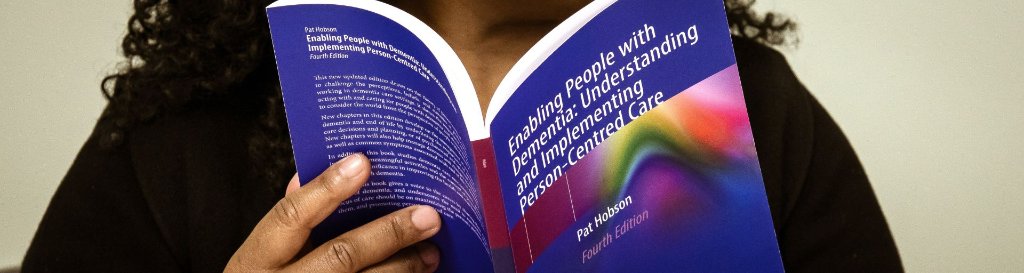
This is also the principle at the heart of Pat Hobson's book, "Enabling People with Dementia: Understanding and Implementing Person Centred Care." The book argues that people living with dementia must remain in the driving seat of their own life, not as passengers in a journey managed by others. It explores how person-centred care, properly understood and implemented, is not about doing things for someone but about creating the conditions in which they remain the author of their own experience.
The model and the book both make the same argument: person-led and person-centred care are not competing approaches. They are complementary ones. The most effective dementia care requires the full integration of both philosophies working together, used interchangeably, as two sides of the same coin.
What This Looks Like on a Tuesday Afternoon
Theory is easy. Tuesday afternoon is hard.
Using person-led and person-centred care interchangeably means that when someone refuses personal care, the response is not "we will come back in an hour and try again." It is a genuine attempt to understand what the person is communicating through that refusal. What need is not being met? What fear is being expressed? What choice is the person exercising, and how can we support it rather than override it? That is person-centred understanding applied through person-led practice.
It means that when someone is distressed, the first response is not to reach for a non-pharmacological intervention to "manage" the behaviour. It is to ask: what is this person telling me? What is their lived experience in this moment? Distress is communication. Taking that seriously is both person-centred, understanding the person, and person-led, honouring their voice.
It means that when someone wants to walk, repeatedly, restlessly, for hours, the response is not to redirect or distract. It is to ask why. What need is being expressed through movement? Is it purposeful? Is it pleasurable? Is the person leading us to something we have not noticed? Person-centred curiosity meets person-led respect for the person's choices.
And it means that care plans are not documents written about someone. They are documents written with someone, reflecting their voice, their choices, their stated preferences, even when those preferences are uncomfortable for the system to accommodate. That is person-centred care, built on deep knowledge of the person, and person-led care, the person shaping their own plan, working as one.
None of this is easy. It requires staff who are deeply trained, deeply supported, and deeply committed to seeing the person not just as someone to care for, but as someone to follow. That level of practice does not come from mandatory training. It comes from comprehensive, structured, ongoing education, the kind that builds genuine competence over time.
The Role of Safeguarding and Proportionality
When we talk about letting people living with dementia lead, a legitimate question arises: what about safeguarding? What about situations where the person's choices put them at risk? Does person-led care mean letting someone make decisions that could harm them?
This is where the interchangeability of person-led and person-centred care becomes essential, and where the principle of proportionality, embedded in the Care Act 2014, provides the framework.
Person-centred care ensures we understand the person deeply enough to recognise when a choice reflects a genuine preference and when it reflects an unmet need, a communication failure, or a response to an environment that is not supporting them. Person-led care ensures we do not override that choice simply because it is inconvenient for the system. Proportionality ensures that when we must intervene, when the risk is genuine and the person cannot make the decision safely, we do so in the least restrictive way possible, for the shortest time necessary, and with the person's involvement restored as quickly as possible.
This is not a tension between person-led and person-centred care. It is exactly where they work best together. Person-centred understanding tells us what is happening for the person. Person-led respect tells us to take their choices seriously. Proportionality tells us how to respond when safeguarding concerns arise. Used interchangeably, with safeguarding principles integrated throughout, they create a practice that is both empowering and protective, not one at the expense of the other.
Safeguarding does not override person-led care. It informs it. And person-led care does not ignore safeguarding. It ensures that safeguarding interventions are proportionate, person-centred, and restored to the person's control as soon as it is safe to do so.
Why Training Depth Matters
You cannot embed the interchangeable use of person-led and person-centred care through a two-hour workshop. You cannot cover the nuance of supported decision-making, the ethics of autonomy, the relevant legal frameworks, the integration of safeguarding principles, the practical skills of communication under pressure, and the self-reflection required to change deeply ingrained habits in a single training session.
This is where training depth becomes non-negotiable. Using these approaches interchangeably requires staff who understand not just what to do, but why. They must be able to adapt that understanding to the unpredictable, complex reality of supporting people living with dementia in real time.
PMH Consultancy's Dementia Care course is built across 16 modules precisely because this depth cannot be compressed. The course covers personhood and identity, communication techniques that work in real care settings, behavioural support grounded in non-pharmacological approaches, legal frameworks, safeguarding, cultural competence, and leadership. The interchangeable use of person-led and person-centred care touches every one of these areas.
It is the difference between staff who can recite the definitions of person-centred and person-led care, and staff who can tell you, in detail, what they did differently on their last shift because they used both interchangeably, without even thinking about which label applied.
If you are responsible for dementia care outcomes in your organisation, whether you are a care manager, a commissioner, or a team leader, the question is not whether your staff have heard of person-centred care or person-led care. Of course they have. The question is whether they understand that these are not competing labels but complementary practices, and whether they have the training depth to use them interchangeably in real situations, with real people, in real time.
What Changes When You Get This Right
When person-led and person-centred care are genuinely used interchangeably, woven together in daily practice rather than separated into competing methodologies, the impact is measurable. Research on person-centred care interventions has shown reductions in agitation, neuropsychiatric symptoms, and depression, alongside improvements in quality of life. Integrating person-led principles takes those outcomes further by addressing the root cause: the loss of agency that people living with dementia experience in care settings.
Staff benefit too. When care teams are trained to work in a way that integrates both approaches, they report greater job satisfaction, fewer incident reports, and a stronger sense of professional identity. They are not following a script or choosing between two competing frameworks. They are exercising judgement, creativity, and genuine care. That reduces burnout, improves retention, and creates a culture where good practice is self-sustaining.
And for people living with dementia, and their families, the difference is profound. It is the difference between being cared for and being in control. Between being seen and being heard. Between existing in a care setting and living in your own life.
That is not a training outcome. That is a transformation.
Where to Start
If you are reading this and recognising that your organisation treats person-led and person-centred care as separate or competing concepts, or uses one without the other, you are not alone. The gap between these two philosophies is one of the most common challenges we hear from care providers. The good news is that closing that gap, and moving to a practice where they are used interchangeably, is achievable with the right approach.
It starts with training that goes deep enough to change practice, not just awareness. It requires leadership that models the integration of both approaches, not just mandates one over the other. And it needs a framework that is consistently applied, audited, and sustained, not a one-off initiative that fades when the next priority arrives.
PMH Consultancy's 16-module Dementia Care course is designed to do exactly this. It builds the knowledge, skills, and confidence your team needs to use person-led and person-centred care interchangeably, not as concepts they have heard of, but as a single, integrated practice they own. If you are ready to move beyond labels and embed genuinely transformational dementia care, that is where to begin.
And if your organisation needs a more tailored approach, if you are dealing with specific challenges around culture change, CQC compliance, safeguarding integration, or complex case management, PMH's consultancy services are built for exactly that. We work alongside your team to identify what is getting in the way and build a pathway to practice that genuinely transforms outcomes.
The shift from treating person-led and person-centred care as competing labels to using them interchangeably in practice is not semantic. It is the difference between doing care to someone and doing care with someone. And in 2026, with the sector under more pressure than ever, it is the shift that will define the services that genuinely thrive.
Because people living with dementia do not need you to choose between person-centred and person-led. They need both, woven together, used interchangeably, and practised with the depth that only comprehensive training and genuine commitment can provide.
This article is part of PMH Consultancy and Education's commitment to transforming dementia care through integrated, evidence-based practice. The 16-module Dementia Care course covers person-led and person-centred care in depth, alongside communication, behavioural support, legal frameworks, safeguarding, and leadership. To explore the full course, visit the PMH Academy. For tailored consultancy support, contact PMH directly.